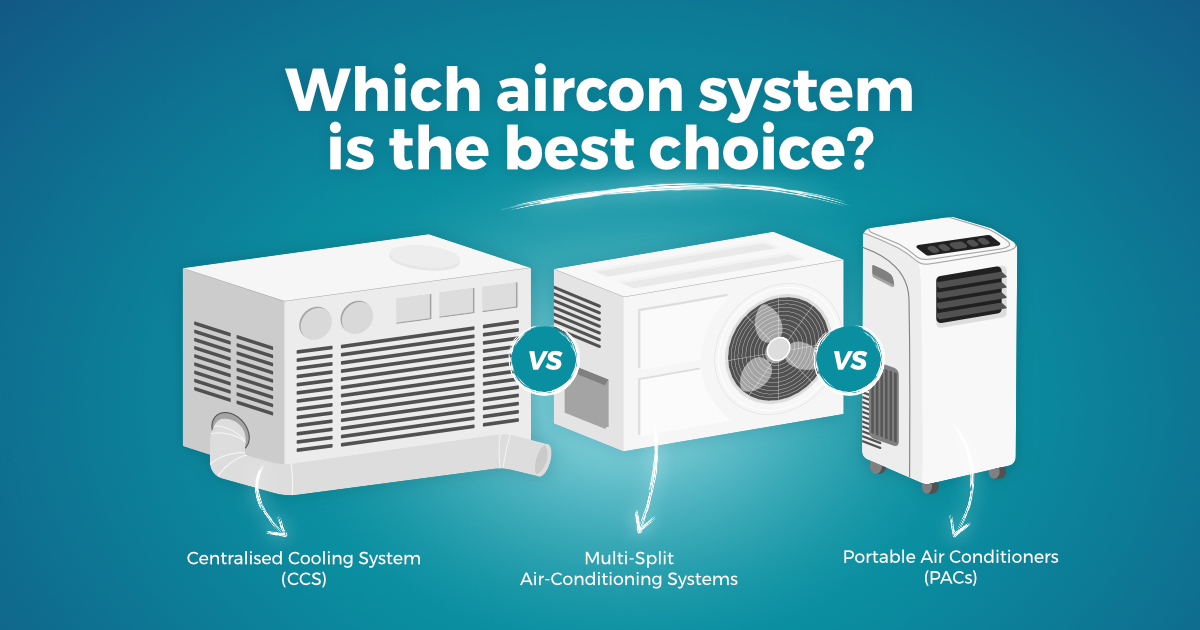
In Singapore’s tropical climate, keeping homes cool is essential for comfort and energy savings. Homeowners in Tengah can choose from three options: Centralised Cooling System (CCS), multi-split air-conditioning systems (System 1-5), and portable air-conditioners (PACs). This article compares these systems across four key factors – energy efficiency, reliability, convenience and cost savings – to help households evaluate which one best aligns with their needs and lifestyle.
Energy Efficiency
A main consideration when deciding on a cooling system is how much energy it consumes. As this directly impacts the monthly utility bills, a cheaper but lower energy-efficient option will cost more in the long run.
The CCS uses chilled water produced in centralised plants on selected HDB rooftops that are piped to individual homes to absorb and remove heat. The fan coil unit (FCU) circulates the room’s air over these chilled pipes, cooling the space and transferring heat back to the chilled water network. The now-warm water is returned to the plant, where heat is expelled through a cooling tower. Having a central chiller enables better energy efficiency compared to many small outdoor condenser units as it can be optimised to run at full capacity.
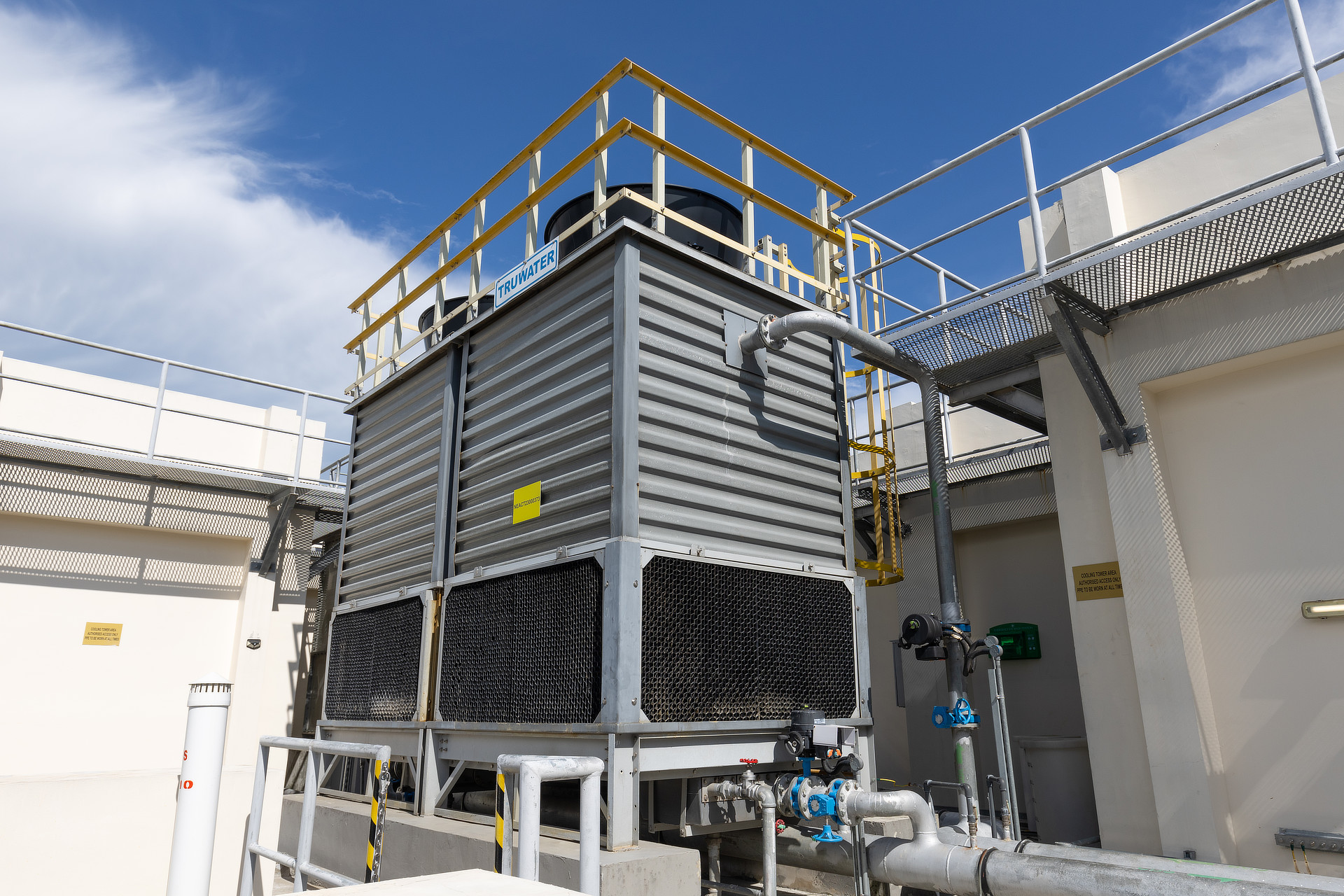
A cooling tower through which heat is expelled
Multi-split air-conditioning systems cool several rooms from a single outdoor condenser. Cooled refrigerant is distributed to several FCUs to deliver comfort across multiple spaces. In dense residential blocks, however, clusters of outdoor condensers can lead to the stack effect. This occurs when warm air builds up around multiple units and rises, causing those living on upper floors to feel warmer. As such, residents may overwork their air-conditioning systems when trying to achieve a comfortable room temperature.
PACs are typically the least energy-efficient cooling option. They release hot air through an exhaust hose, but if the window seal is loose, heat can leak back inside. With the condenser housed inside the unit, residual heat also escapes, further reducing performance.
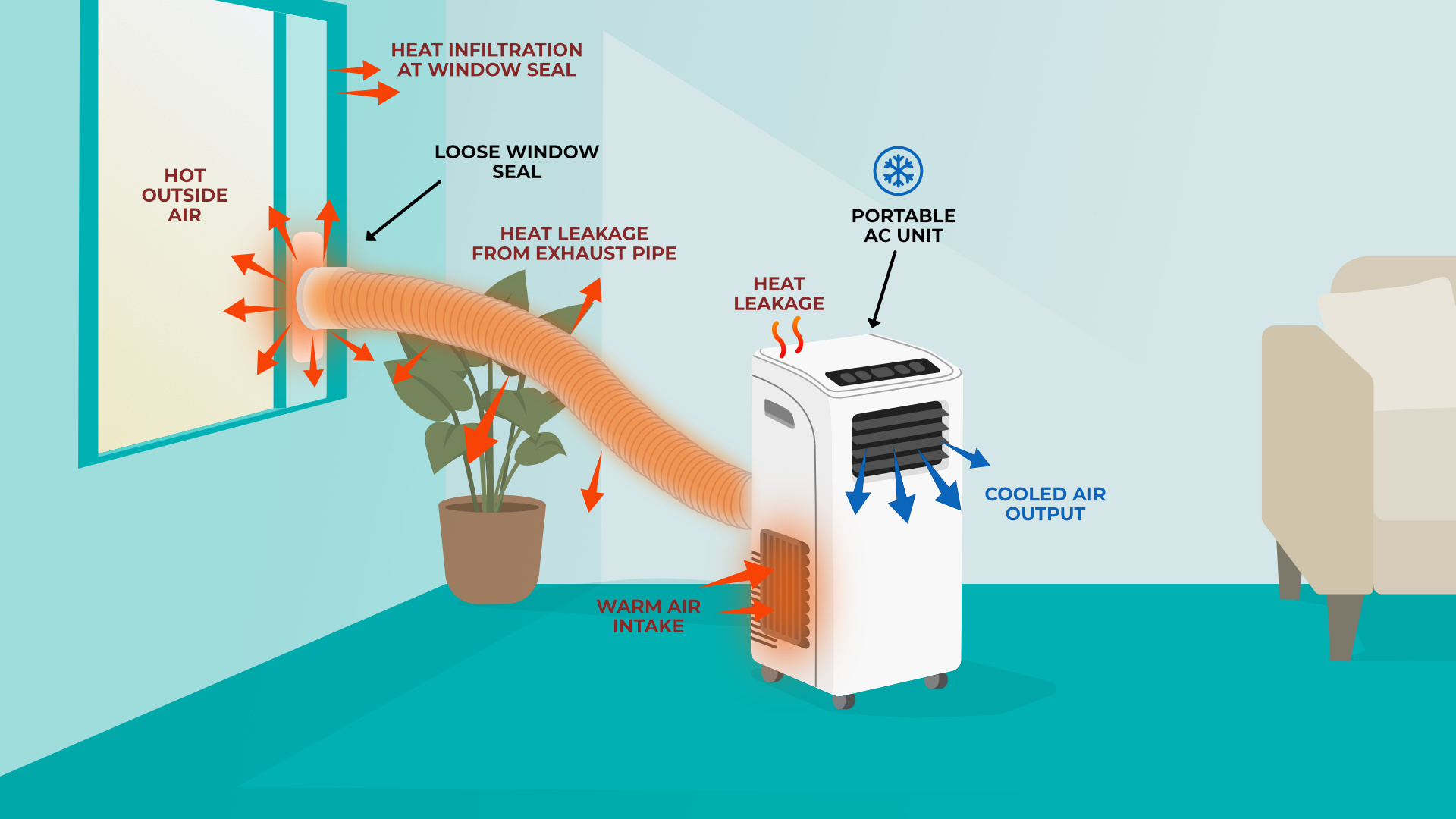
Why PACs may not cool as effectively
Reliability
Home cooling is a significant investment, so it is important to choose a reliable system. Within the CCS, multiple chiller plants are interconnected via a network of pipes to serve a cluster of blocks. If one plant goes offline for maintenance, others can take over to maintain cooling. CCS offers warranty and servicing as well, so homeowners know what to expect.
Multi-split air-conditioning systems depend on outdoor condensers for cooling and an FCU is only connected to one condenser at any time. If a condenser fails, the connected FCU can no longer cool the room. Warranties may be tiered, with different coverage periods for components. This gives households flexibility in choosing service providers.
PACs can cool smaller rooms but are less suitable for larger spaces. Their lifespans are shorter than CCS and multi-split systems. Warranties and after-sales support are simpler, with routine tasks like filter cleaning and hose setup often handled directly by the owner.
Convenience and Comfort
Due to lifecycle requirements like regular servicing and noise, selecting the right air-conditioning system is key for convenience and comfort.
With CCS, homeowners do not need to install their own air-conditioning systems. FCUs can be pre-installed and ready for use before you collect your keys. There is also no outdoor condenser unit, which eliminates the need for maintenance as well as any potential noise or heat issues. A dedicated service team monitors and operates the central chiller plants 24 hours a day.
Noise plays a big role in everyday comfort. The CCS uses magnetic bearing compressors, which are quieter than those used in conventional systems. The chillers are housed on HDB rooftops in an enclosed container, away from residential units, to reduce noise levels. With the CCS also eliminating the need for outdoor condensers, this enables a quieter environment for residents. In contrast, PACs are usually the loudest option since their compressors sit inside the room, adding both unwanted sound and visual clutter.
Cost Savings
Keeping cool can account for nearly a quarter of household electricity use in Singapore, so factoring in potential savings is crucial when choosing a cooling solution.
With the CCS, each household has its own chilled-water meter housed in a dedicated riser outside the unit, alongside the electricity and gas meters. Chilled water usage can be seen on a separate line item on your household's monthly SP Utilities bill, keeping cooling costs distinct from other utilities.
Residents can easily track their chilled water usage through the SP app, which makes it simpler to manage energy use. SP also offers upfront discounts on FCUs. By saving on both installation and maintenance, it helps residents enjoy lifecycle savings of up to 30 per cent by cooling their home with CCS.
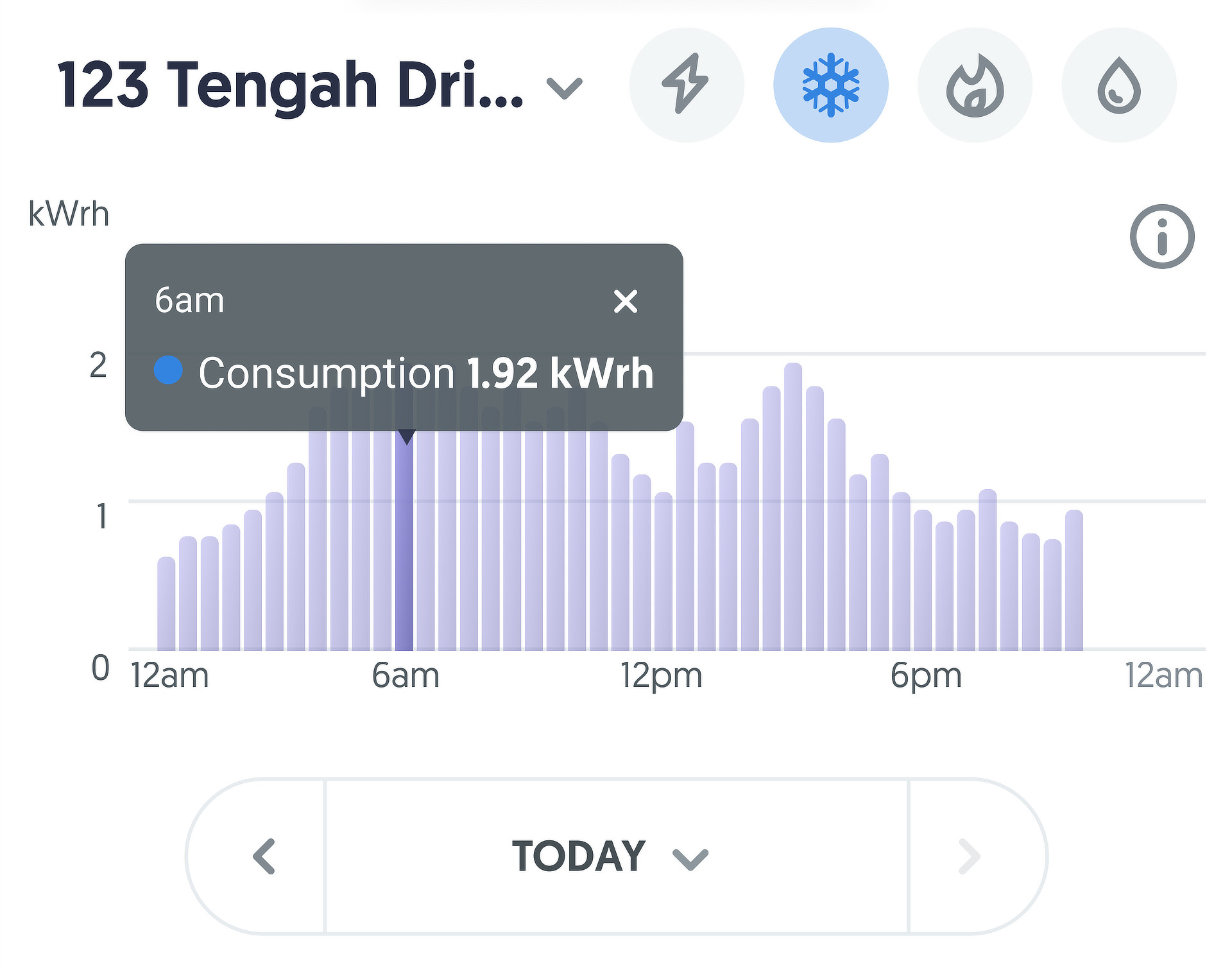
Easy tracking of chilled water usage (kWrh) in the SP app
For households using multi-split air-conditioning systems, cooling energy is included in the overall electricity bill, making it harder to track separately. While some brands offer apps to monitor energy use, these apps only show energy consumption and not the actual cooling costs, meaning households still need to calculate expenses on their own. In addition, outdoor condenser units typically need replacement after about seven years. Keeping these factors in mind helps households weigh the convenience of multi-split systems against long-term budgeting and savings.
PACs do not usually come with built-in tracking, though newer smart models may include apps that let you track energy use. A practical alternative to such apps is a smart plug: plug it into the wall outlet, pair with an app, and it will display your electricity use. By identifying usage spikes, households can cut waste and unlock savings.
The Takeaway
By weighing system reliability, efficiency, convenience, comfort and long term costs, households can make a choice that best fits their lifestyle. Households that opt for CCS can enjoy an added peace of mind with SP’s complimentary MyTengah Care+ programme. This includes a three-year workmanship warranty (covering piping, trunking, and insulation) plus three years of biannual FCU servicing and health checks at no extra cost. If you are interested in finding out more about the CCS, visit our showroom to experience it firsthand!



