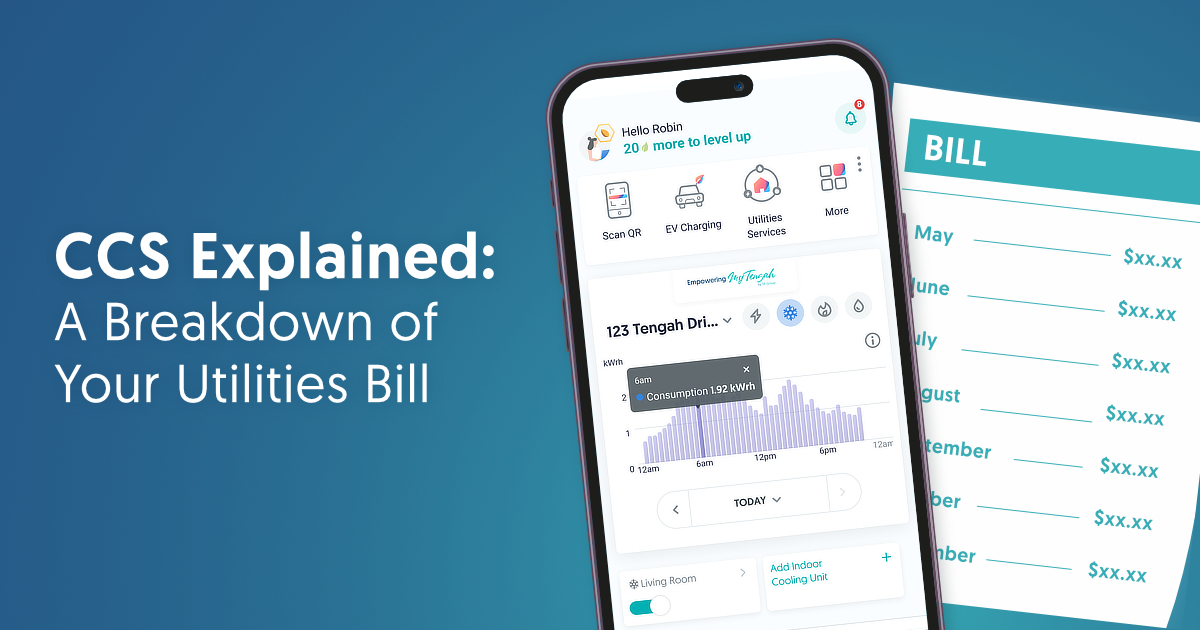
With the Centralised Cooling System (CCS), your home is cooled using chilled water centrally produced from interconnected modular rooftop chiller plants. Knowing how your usage is measured and billed helps you track costs and avoid surprises so you can enjoy the comfort with a peace of mind.
How to view your SP Utilities bill:
You will receive your SP Utilities bill either digitally or as a physical copy. If you have registered your utilities account on the SP app or Utilities Portal, your bill will be issued digitally and can be accessed through either platform.
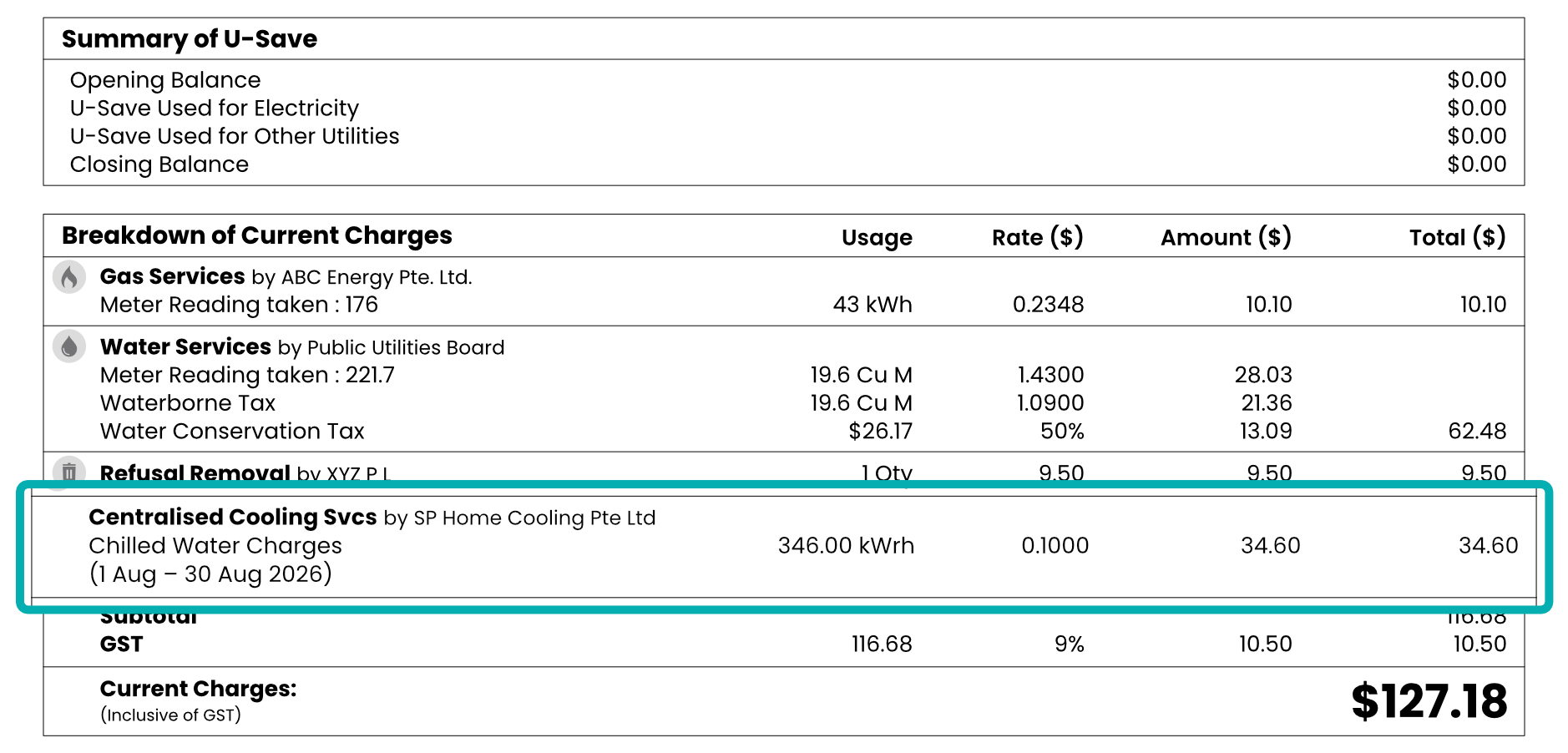
Zoom into your chilled water usage charges
For households subscribed to the CCS, monthly chilled water charges are shown as a separate line item on the SP Utilities bill, alongside water, gas and electricity charges.
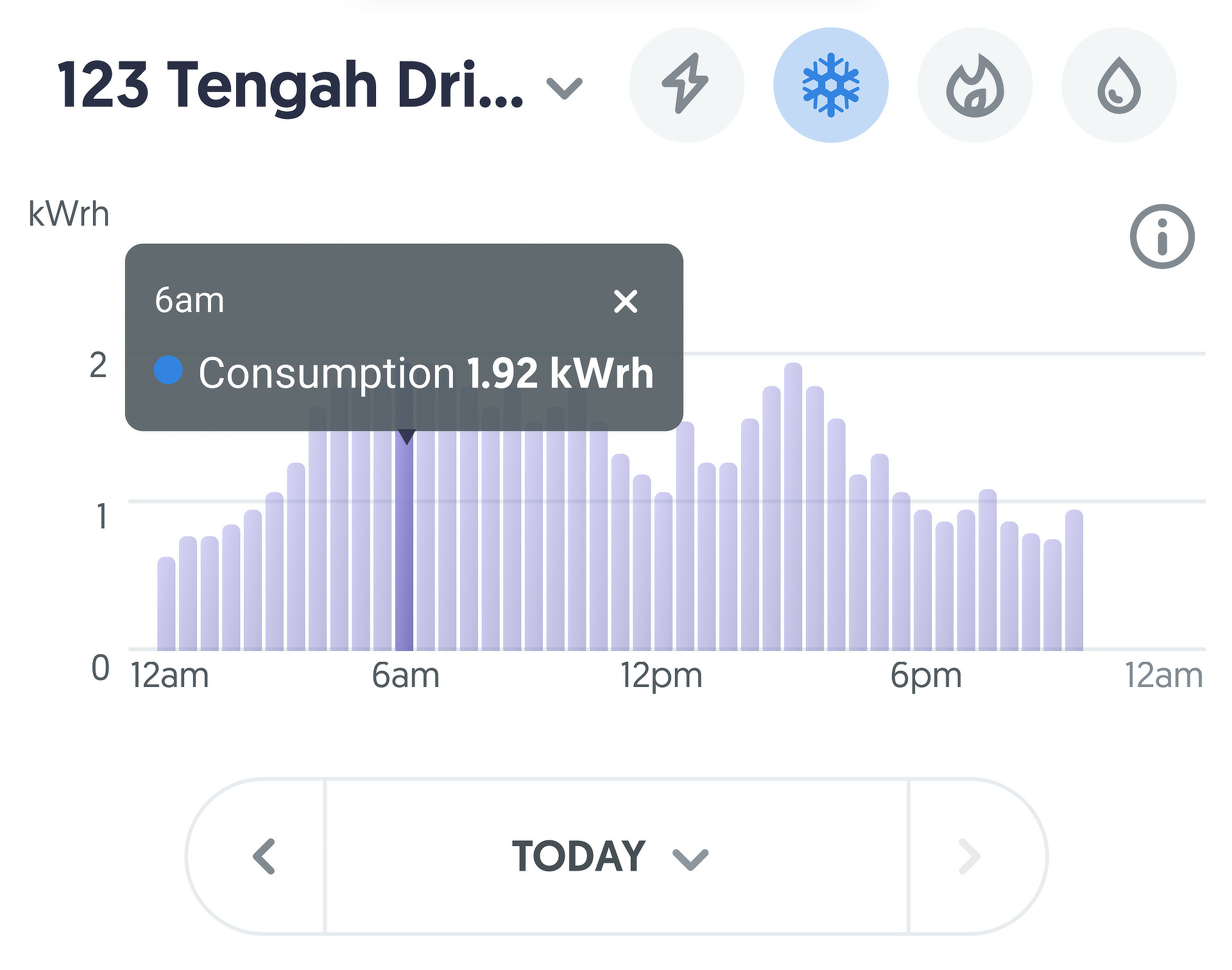
Track your daily chilled water usage patterns with the SP app
With the SP app, you can also view your chilled water usage, with the data updated daily, showing half-hour intervals. This greater visibility helps you monitor changes in your consumption and manage costs.
Understanding chilled water charges
How are your monthly chilled water charges calculated?

Calculate your chilled water charges
Monthly Chilled Water Charges
=
Kilowatt refrigerant hours (kWrh) x Prevailing chilled water usage rate ($/kWrh)
As seen in the example above:
346.00 (kWrh) x $0.10 ($/kWrh) = $34.60
Your monthly chilled water charges are calculated by multiplying the following:
- Kilowatt refrigerant hours (kWrh): Amount of cooling energy used to cool your home.
- Prevailing chilled water usage rate ($/kWrh): Cost of one unit of chilled water cooling energy.
Why do the chilled water charges change over time?
The formula above explains the basics of your monthly chilled water charges. To understand why the amount changes from month to month, let’s take a closer look at two main factors: metered chilled water usage and the current usage charge rate.
Metered Chilled Water Usage
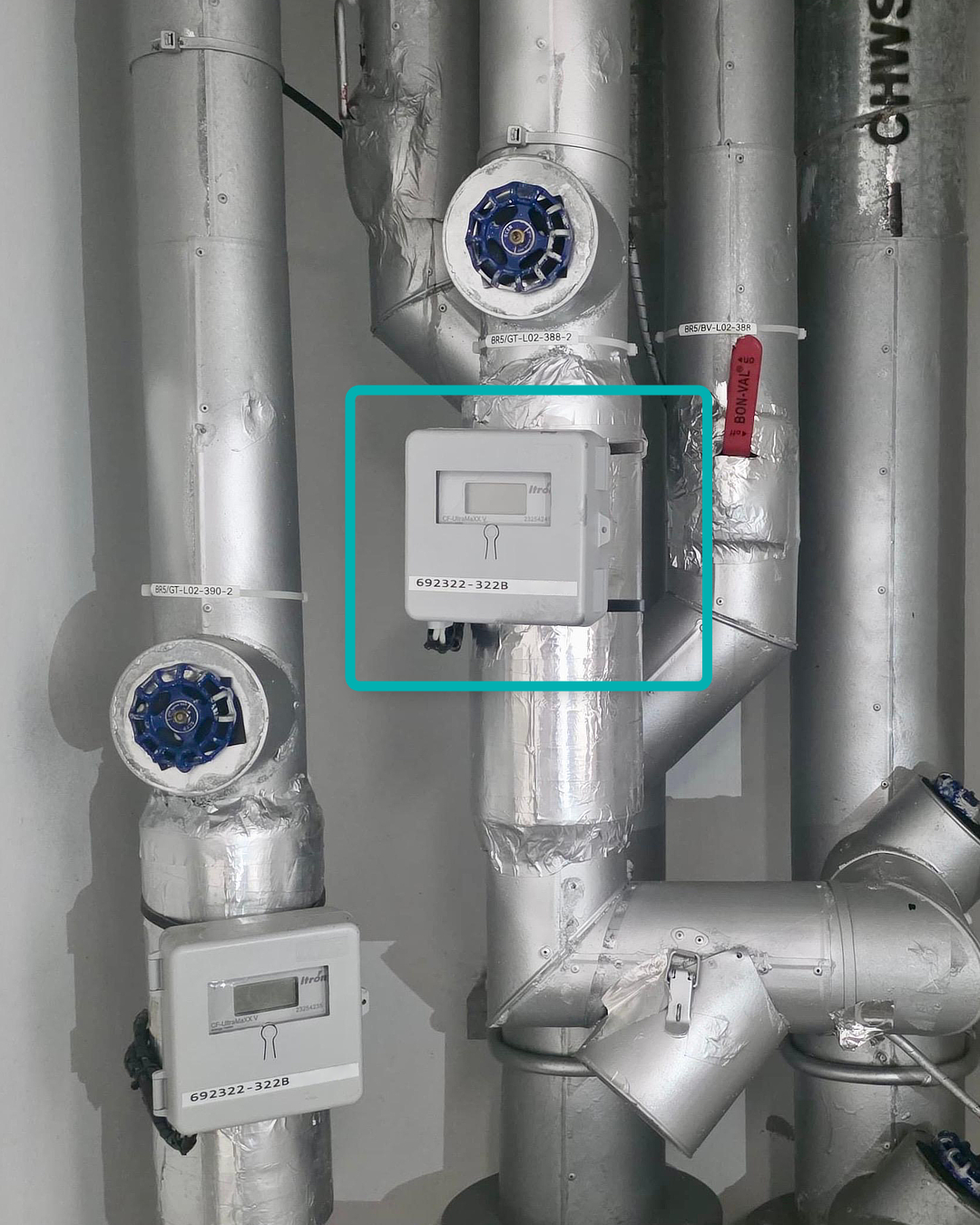
A dedicated meter records your chilled water usage
Your Metered Chilled Water Usage (kWrh) reflects how much chilled water your unit uses in terms of cooling energy. It is measured by a dedicated CCS meter, which records your consumption digitally. The data is then transmitted remotely to SP, and updated in your SP app.
Current Usage Charge Rate
The current Usage Charge Rate ($/kWrh), is reviewed and adjusted quarterly to reflect the overall cost of running the CCS. This includes:
- Capital costs for the chiller plant and network pipes, operations and maintenance, projected cooling energy consumption,
- Prevailing residential electricity energy charge in S$ per kWh (excluding GST),
- Prevailing domestic potable water prices, water borne fees, water consumption taxes as published on the PUB website, and
- Consumer Price Index (CPI) published by the Department of Statistics, Singapore.
This is similar to how conventional air-conditioning electricity charges may fluctuate due to external factors including fuel prices and geopolitical events.
Why CCS remains more cost-effective than conventional air-conditioning systems
The CCS offers better cost efficiency because electricity is used only to power the FCU and its blower fan — a minimal energy load comparable to that of a household fan. Cooling is delivered via chilled water, supplied at a rate of 10 cents/kWrh, which is periodically reviewed.
By shifting the cooling load to centralised chilled water delivery and minimising direct household electricity consumption, the CCS helps residents benefit from the economies of scale and efficient centralised cooling infrastructure.
In contrast, conventional air‑conditioning relies entirely on electricity to power not only the FCU, but also — and critically — the outdoor condenser unit. Its compressor consumes the largest portion of cooling-related electricity use. As a result, conventional systems are more exposed to fluctuations in electricity pricing.
Wear and tear over time can also impact condenser performance, which adds to the maintenance cost. As condensers are not part of the CCS, subscribers need not worry about servicing on that front, while the rooftop chiller plants that generate chilled water for the CCS are continuously maintained by SP Group.
To add more value to your CCS subscription, all customers can also enjoy the MyTengah Care+ programme at no additional cost. This includes a three-year warranty, free FCU servicing twice a year, and CCS health checks that provide enhanced protection and reduce the risk of unexpected surprises.
How can I optimise my CCS savings?
Beyond the system’s cost advantages, households can take simple steps to maximise savings and efficiency. You can optimise your CCS savings by using your system efficiently and maintaining your equipment regularly. Set your FCU temperature to 24°C, which balances comfort and ensures efficient use of chilled water and energy. Regular maintenance is important to keep your CCS running efficiently. By servicing your FCU regularly, you can enjoy cleaner airflow, save energy, and extend your FCU’s lifespan.
SP Group supports your CCS journey
If you have any questions or concerns about CCS, you can reach out to us. Our customer service team is happy to help. For urgent matters, our 24-hour hotline is available, with technicians on-site ready to assist with technical issues.



